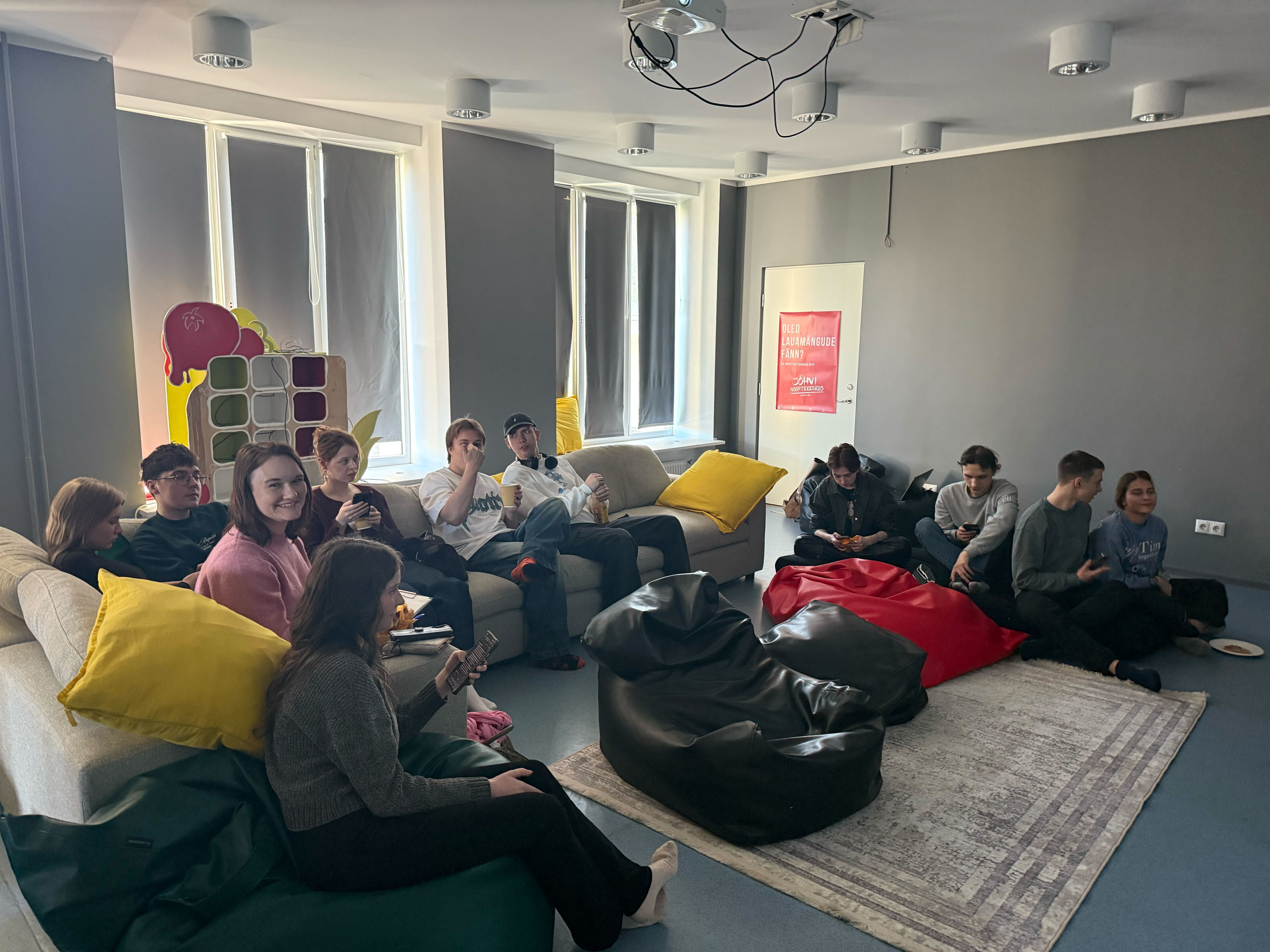
This winter the Estonian Refugee Council together with partners Finnish Refugee Council, Irish Refugee Council and Danish Refugee Council Youth, conducted a transnational survey to find out that the refugee youth wants more opportunities to connect with others, develop new skills and have their voices heard, while the main barriers to participation are lack of time, language difficulties and limited awareness of available activities and opportunities.
A total of 227 young people aged 13–29 from Estonia, Finland, Ireland and Denmark participated in the survey. Representing 14 different countries of origin, the respondents included both refugees and young people with migrant backgrounds who were either born in or had moved to their current country of residence. Respondents were recruited through each organisation’s youth programmes, meaning the survey reflects the experiences of the migrant and refugee youth supported by the participating refugee councils.
The survey was conducted in eight languages and reflected the diverse experiences of migrant and refugee youth across the four countries, with participants ranging from recent arrivals to long-term residents.
In Estonia, 65 young people participated in the survey. Most were aged 13–17 and had lived in Estonia for 3–5 years. Nearly all respondents were Ukrainian refugees who arrived in Estonia following the start of the full-scale war in Ukraine in 2022.
Below we will share the results in more depth to present youth voices and inspire youth professionals to design activities and support structures that respond to the needs of the target group themselves.
Youth events: preferences and obstacles
Most young people in all four countries had previously taken part in sports or outdoor activities, which were also the most popular choice for future participation. In Ireland, however, political and human rights activities were most preferred, while in Estonia young people also showed strong interest in social peer groups and creative activities such as art, music and theatre. Across all countries, social media was the main way young people learned about youth activities, followed by friends and family.
The main barrier to participation in youth activities was lack of time due to school, work or family responsibilities. While this is a common challenge for many young people, it may also reflect additional pressures faced by refugee families, where young people sometimes take on responsibilities at home due to financial constraints.
The second most common barrier was language, with fewer difficulties reported among young people who were born in their host country or had lived there for more than five years. Language barriers were also less significant in Ireland due to the widespread use of English, where instead distance and transport were more often cited as challenges. Across all countries, limited awareness of available youth activities was also a recurring obstacle.
Limited local language skills and a lack of awareness about available services and opportunities are common challenges for young people with migrant backgrounds. This highlights the importance of actively sharing information about activities and ensuring they are designed to be accessible regardless of language ability, for example through multilingual formats or low-threshold participation options.
Activation of youth
A key aim of cooperation between refugee councils is to empower young people to take on leadership roles, design activities on topics important to them, and have their voices heard in society. The survey therefore also explored how young people feel about being heard in their communities and which issues they would like to promote.
Some young people felt their views are not always heard due to language barriers or their social status. Limited language skills and lack of platforms to express themselves can make it harder for them to share their ideas. This highlights the importance of creating more opportunities for migrant youth to be visible and participate meaningfully in society.
Across all four countries, the most popular topic young people wanted to promote was health and wellbeing, reflecting both its general importance for youth and the particular mental health challenges faced by asylum seekers and refugees. In Ireland and Denmark, integration and communication as well as human rights and equality were also key priorities, highlighting the strong awareness among migrant youth of issues related to social cohesion and rights. The importance having the opportunity to promote topics important to the migrant youth is explained by two Irish respondents:
[I want to] promote human rights, equality, and education in my community because they help people live together in peace and understand each other better. Sometimes I feel that my ideas are not listened to because young people or people from different backgrounds are not always included in decision-making.
I believe young people need more opportunities to develop their skills, build confidence, and connect with others. From my experience, many youth feel motivated but do not always have access to the right support, information, or safe spaces where they can express themselves.
Among Ukrainian youth in Estonia, the most popular topic was creativity (69%), seen as a way to relax and express oneself and support wellbeing. This was followed by employment and career (29 responses) and education and training (26 responses), reflecting key concerns about future opportunities. Limited Estonian language skills remain a significant barrier to continuing studies and accessing long-term career paths.Read more how these topics are addressed in ERC’s programme focusing on language learning and future opportunities.
Integration and social cohesion
Contact between young people from different cultural backgrounds is most commonly happening in schools and friendship groups, helping to reduce segregation and strengthen social cohesion. In Estonia and Finland, schools were the main place of interaction with local-born peers, while in Ireland newly arrived youth most often met others through youth organisations and integration activities. In Denmark, where many respondents were older and more likely to be locally born, contacts mainly took place within friend networks.
Most respondents reported a moderate to strong sense of belonging in society: 39% felt they belonged “somewhat”, followed by 59 respondents who felt they belonged “quite a lot” and 26 who felt they belonged “completely”, while smaller groups reported feeling they belonged “a little” (18) or “not at all” (6).
Across all four countries, young people born in their country of residence were more likely to feel that their opinions are “often” heard in their community, school and society. This suggests that being locally born is linked to a stronger sense of being heard and visible, likely due to better language skills and wider social networks that make it easier to express views and participate.
Young people were also asked to reflect on their sense of belonging and connection across cultural and ethnic lines. Some migrant youth felt more comfortable connecting with peers who shared similar migration experiences, describing a sense of understanding and solidarity:
I feel comfortable socialising with people of different backgrounds as I myself come from a different cultural background. I come from Spanish culture and have a lot of diversity in my friend group. I feel like I do belong to society, but perhaps not specifically to Finnish society. I don't know their cultures, traditions, language and that makes me feel left out. But one day I hope to be able to learn the language and to get more in touch with their traditions and cultures.
One young person in Denmark expressed that having different ethnicity and religion than the majority of the population might curtail the sense of belonging:
Because I was raised with people of different ethnicities and my parents raised me to be open to everyone. In some ways I do feel like I belong but in other ways my religion and ethnicity isn’t always 100% accepted into this society making me feel like I don’t always belong.
Youth in Ireland and Denmark shared their ideas how participating in community activities with diverse participants helps to overcome cultural divides and create connections:
I feel comfortable socialising with young people from different cultural backgrounds and local-born youth because I like learning about new cultures and sharing ideas. Sometimes it can be difficult because of language or cultural differences, but I always try to connect and make friends. I feel that I belong to society because I participate in community activities and I like helping others.
I think the problem is that there needs to be more exposure in order to mix groups. If you go to an event you usually go because you know a friend. If the activity is with mixed people groups, then you get more friends. And it's like a snowball effect. If all your friends are from one specific group, it needs to be facilitated in order to mix.
Conclusion
The findings of this survey show that young people with migrant and refugee backgrounds are eager to participate in society, build connections and develop new skills, but often face practical barriers such as limited time, language difficulties and lack of information about available opportunities. While schools, friendship networks and youth organisations play a key role in fostering contact across cultures, more intentional efforts are needed to ensure equal access to participation and to create inclusive spaces where all young people feel heard and valued. Strengthening language support, improving information sharing and actively facilitating meaningful interaction between diverse groups are essential steps towards more inclusive youth work and stronger social cohesion across Europe.
When designing activities and programmes, it is important to take into account what activities, topics and themes are important to them. Allowing the youth themselves to be involved in or take lead in designing activities and projects targeted at them is a way to make the programmes most useful and relevant. Furthermore, it is crucial to consider why the youth with foreign backgrounds might not always feel comfortable in a country and society they live in, addressing the issues of sense of belonging and integration across different cultures.
The survey was carried out as part of an ongoing cooperation project “Refugee Councils United for Youth” that aims to develop youth work practices and programmes through coordinated activities and sharing of learning across four refugee councils. The project “Refugee Councils United for Youth” is funded by the EU Erasmus+ programme.