Image
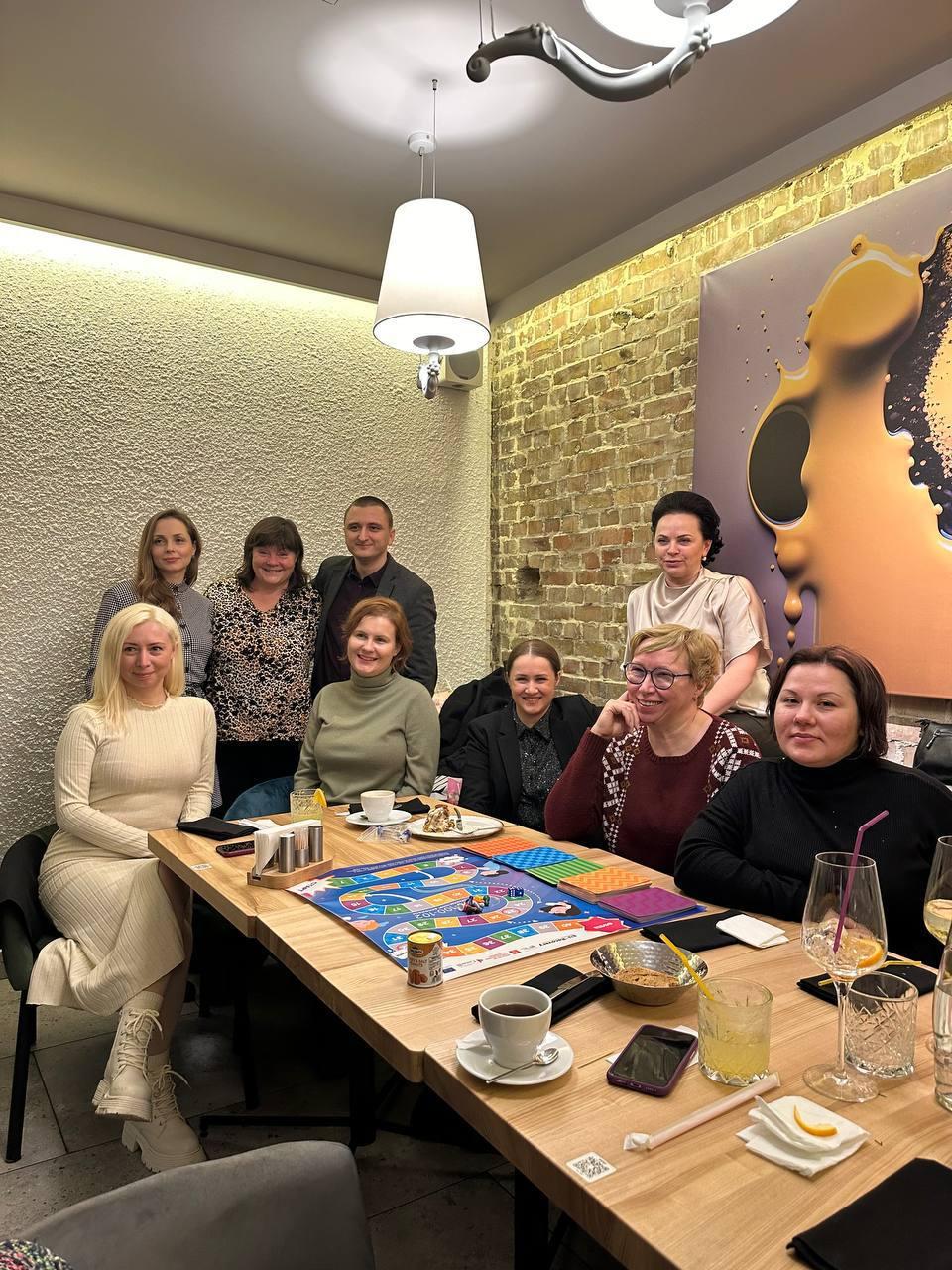
In the midst of ongoing war and mass displacement, access to mental health support can be a lifeline. Last spring, in collaboration with the Ukrainian National Psychological Association, the Estonian Refugee Council relaunched its mental health support hotline, providing psychological assistance to Ukrainians both in Ukraine and across 20 other European countries. Olha, one of the helpline’s consultants, opens up about her work helping others while confronting the personal challenges brought on by the war.
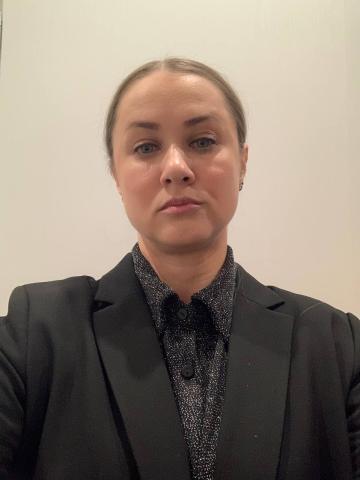
My name is Olha. I am originally from the Kharkiv region, Lozova district. In my free time, I focus on my family, stay physically active, meet with friends, play with my cats, read books, and watch films. My life motto is: “Do what you can, with what you have, where you are.”
I have been working in the field of crisis psychological support since the time of COVID-19. I participated as a volunteer in the work of the HELP.ME.NPA psychological support line, which was organized by the National Psychological Association in response to the challenges of the pandemic. At that time, it seemed that the pandemic was the worst thing that could happen. We could not imagine that in two years something much worse would happen.
When the full-scale invasion of Ukraine by the Russian Federation began on February 24, 2022, my first thought was: What can I do? As a psychologist, as a human being, as a Ukrainian. When I learned that a psychological support hotline was being organised for people affected by the war, I immediately knew that I had to join. For me, this is my duty – my personal contribution to the healing and recovery of my Ukrainian family.
I cannot fight, and I cannot physically defend my country, but I can do what I know best: support people and help them cope with pain, fear, and loss. Every call, every person whose pain I have been able to ease even a little, is my frontline, my form of service. I feel a deep sense of patriotism, and my work is my way of being useful to my country in its darkest times.
When you hear the voices of people calling from different parts of Ukraine – from temporarily occupied territories, from places under shelling – you truly understand how vital this work is. Sometimes, all a person needs is to hear that someone on the other end of the line understands them, believes in them, and supports them. And if I can give them that feeling, then it means I am doing something meaningful for our victory.
What kinds of problems or emotions do people most often share when they call the hotline, and how has this changed over the past month of the war?
During my work on the hotline, I have noticed that the range of issues is very broad. Most often, people speak about fear for the lives of their loved ones – especially those who are on the front line – fear of shelling, and fear of the unknown. People call when they are unable to calm themselves down; many talk about constant anxiety that has become the background of their lives and does not let go either day or night.
Those who have evacuated abroad often feel frustration because they are not understood there and feel that others cannot truly grasp what they are going through. People who remain in Ukraine sometimes feel isolated, with no one to whom they can safely talk about their pain. There are many calls from people who simply want someone to listen to them – without advice and without judgment. We have also seen an increase in calls from people showing signs of clinical depression, when it is no longer just sadness or apathy, but an inability to function in everyday life.
Overall, if we speak about the dynamics, I would say that the first months of the war were marked by acute shock and panic. Then came a phase of mobilisation, when people were sustained by adrenaline and the will to win. Now we are entering a phase of exhaustion, when personal resources are at their limit and the end is still not in sight.
Can you describe a typical call? What are people looking for when they reach out to you?
There is probably no such thing as a “typical” call, because every story is unique. Often, a person begins by saying: “I don’t know if I should be calling – maybe others have worse problems.” This is very characteristic. People tend to minimize their own pain and feel guilty for needing help.
For example, a woman in her early forties might call. She says she has not slept properly for several months, constantly checks the news, and startles at every sound. Her husband is at the front, communication with him is irregular, and every time the phone stays silent longer than usual, she panics and imagines the worst. She has children at home whom she needs to raise and support, while pretending that everything is fine – but inside she feels emptiness and constant fear. She tells all of this while crying. She says she feels ashamed for crying, but she simply cannot hold it in anymore. She notices that she snaps at her children over small things and then is overwhelmed by guilt afterward.
What is she looking for? First of all, someone who will simply listen. Someone who will not say, “Everyone is having a hard time now,” or give advice like “Try to distract yourself” or “Think positively.” She needs someone to acknowledge that what she is going through is truly difficult – and that this is normal. That her feelings have a right to exist. That she is not weak, but a human being living under extraordinarily difficult circumstances.
Then she needs something concrete: what to do during panic attacks, how to calm herself in the middle of the night, how not to lose herself. We look for answers together; I offer techniques, we discuss coping strategies – but most importantly, she leaves with the feeling that she is not alone.
Another example: a man in his late forties or early fifties calls. He evacuated his family abroad but stayed in Ukraine himself. He says he feels torn apart. His wife and children are safe, but they are struggling – another country, a foreign language, children missing home. His wife asks him to come and says the family longs for him. At the same time, he feels he cannot leave because his work is here, his country is here, his sense of duty is here. Simultaneously, he feels guilty – wondering whether he is a bad husband and father for not being with them.
He talks about insomnia, about losing interest in things that used to bring him joy, about drinking more than before just to fall asleep. He also mentions that sometimes he wonders what the point of all this is – but then becomes frightened by these thoughts and tries to push them away.
What is he looking for? The legitimization of his feelings. Permission to feel what he feels. He wants to hear that he is not a coward and not a bad husband, that his choice makes sense. That the inner conflict he experiences is a normal reaction to an abnormal situation. He needs help finding a balance between duty and family, and understanding how to live with this sense of guilt.
If I were to generalize, I would say that people are looking for three things. First, to be heard without judgment. Second, confirmation that their feelings are normal – that they are not “going crazy” or falling apart, but responding to trauma. And third, some form of concrete help: techniques, strategies, and guidance on where to go next.
The most important thing I have understood during this time is that people need human connection. The feeling that they are not alone in their personal hell. Sometimes the entire conversation consists simply of a person crying while I silently hold that space. And that, too, is help – the chance not to be strong, at least for those forty minutes.
What do you consider the most difficult part of this work, and what helps you cope with these challenges?
The most difficult challenge for me is calls from people with severe mental disorders, particularly those within the psychotic spectrum. The difficulty lies in the boundaries of professional competence – in understanding where hotline support ends and where the need for psychiatric care begins. Establishing contact with a person who is experiencing disturbances in thinking (such as delusions, hallucinations, circumstantial or perseverative thinking, paranoid tendencies, and so on) requires a completely different approach than standard crisis intervention.
Such interactions create an intense emotional burden and often a sense of helplessness, when you witness a person’s profound suffering but your possibilities are limited by the format of a phone call.
What helps me cope with these challenges, first and foremost, is regular supervision, where I can discuss difficult cases with colleagues and receive support. Equally important is accepting my own limitations – understanding that my role is not to treat, but to support and to help orient a person toward accessing specialized care.
How does the hotline support people who are living with prolonged stress, displacement, grief, or uncertainty about the future?
When a person lives under stress for months, it is important not just to “take the edge off” their condition, but to give them a sense that they are not alone in these experiences. The first thing we do is simply listen. It may sound obvious, but when someone is internally displaced and has lost everything familiar, they often have no one they can truly talk to about how they feel.
Often, the people around them are either under stress themselves, already exhausted from listening, or respond with phrases like, “Stay strong, everything will be fine.” On the hotline, however, a person can say, “I am scared, I don’t know what to do next,” and that is accepted as normal.
We do a lot of work around normalizing what is happening to the person. For example, when someone says, “I feel abnormal because I can’t pull myself together, I’m constantly crying, I don’t want anything,” we explain that this is a normal reaction to an unjust war. It is not weakness—it is how the psyche responds to prolonged uncertainty about the future. Often, this understanding alone already brings some relief, as people realize that there is nothing “wrong” with them.
Of course, we also offer concrete techniques: breathing exercises, grounding techniques for moments when panic arises. We explain how stress works, why concentration becomes difficult, why sleep is disrupted. We help people find points of stability. Sometimes these are very simple things – waking up at a certain time, having breakfast, calling someone. When everything around you feels chaotic and tomorrow is uncertain, even small routines can restore a sense of control.
Working with grief is particularly difficult, especially in cases of ambiguous loss. A person may not have the space to grieve because they are focused on survival – arranging daily life, caring for children, solving practical problems. Here, we give permission to express feelings, such as anger or tears, and gently remind them that grief has no “correct” form and looks different for everyone.
When needed, we provide information about where to seek legal assistance or what support programs are available. Sometimes people simply do not know that certain forms of help exist, and learning this alone can bring some sense of calm. If we understand that a person needs long-term therapy or psychiatric support, we refer them to appropriate specialists.
The hotline is a first step – a place to “land,” to stabilize, and to orient oneself toward what to do next. Many people call more than once, and that is normal; it means that the support is truly helping.
What would you like the general public, including the international community, to understand about the mental health needs of people living through the war in Ukraine?
I would like people to understand that the impact of war on mental health, unfortunately, does not end with the arrival of peace. We will be dealing with its consequences for a long time – possibly for decades. It is painful to see that the international community has begun to feel “war fatigue” regarding Ukraine. As global attention shifts to other events, support decreases, while the need continues to grow.
It is crucial to understand that war-related trauma is fundamentally different from trauma experienced in peacetime. It is not a single event after which recovery can begin, but a continuous and prolonged stressor, where the threat does not go away. People live under shelling, not knowing whether their loved ones will be alive tomorrow, whether there will be electricity, heating, or water. And at the same time, they must somehow continue to function – to work, raise children, and support their families.
It is also important to convey to the global community that on our crisis psychological support hotline, we hear immense suffering not only from those directly on the battlefield or who have experienced occupation, but also from veterans and their families; from mothers who evacuated with their children and feel guilt for leaving their husbands behind; from children (under 18) who have lost years of a normal childhood and are now struggling with symptoms of mental disorders; from people in the rear who experience helplessness and survivor’s guilt; from medical workers and volunteers operating at the limits of their capacity; and from psychologists who help others while needing support themselves.
These are devastating consequences of this unjust war, and addressing them requires enormous resources. All of these people need long-term support, yet our psychological care system is already struggling to meet the scale of this tragedy.
When we speak about concrete support that is needed now, it is not only financial assistance – although funding is critically important. What is also needed are long-term support programs and accessible psychological care throughout the country. There must be recognition that restoring the mental health of Ukrainians is an integral part of rebuilding the country, no less important than restoring infrastructure.
And finally, we desperately need the world not to forget about us – to understand that the war has not ended, that people continue to suffer, and that they still need help.
Where do you find strength and inspiration in such difficult times? What helps you keep going?
There are days when, after another shift on the hotline, the exhaustion feels overwhelming – when it seems like you simply cannot go on. Especially after hearing stories that break your heart: calls made during active shelling, mothers crying over sons who have been killed, moments when you realize that all you can offer are words, while people need so much more.
Paradoxically, what sustains me are these very people. When you see how much strength Ukrainians have – how they rise again and again after every blow, how they continue to live, love, and make plans even in this hell – it is deeply inspiring. Sometimes a person calls in complete despair, and half an hour later says, “Thank you, I feel better now. I know what to do next.” That sense that your words matter, that you are truly helping, gives you the strength to continue.
I am also supported by my team – my colleagues. All of us on the hotline understand each other without words. After a difficult shift, you can write in the chat, “That was a hard call,” and support immediately follows. We share experiences and hold each other up, and this sense of community is vital. Without it, the work would be much harder.
Of course, I also have my own self-care practices. Walks and time for myself are not a luxury, but a necessity. Otherwise, burnout comes quickly, and then you can no longer help anyone. You have to keep your own cup full in order to be able to pour into others.
What also sustains me is faith in Ukraine and in our victory. It may sound lofty, but it is true. I see how many people are contributing in their own way, and I understand that my work is part of a larger mosaic. I cannot change everything, but I can change something for one specific person who is on the line right now.
And finally, I am sustained by thoughts of the future – by the belief that one day this war will end, and we will need to rebuild the country not only physically, but psychologically as well. The experience we are gaining now, the knowledge of how to work with such challenges and how to support people in crisis, will be essential later. We are learning now so that tomorrow we can be better professionals for our country. That, too, gives meaning to everything that is happening.
The work of the NPA Psychological Hotline is implemented in partnership with the National Psychological Association of Ukraine and made possible thanks to funding from ESTDEV – Estonian Centre for International Development.


