
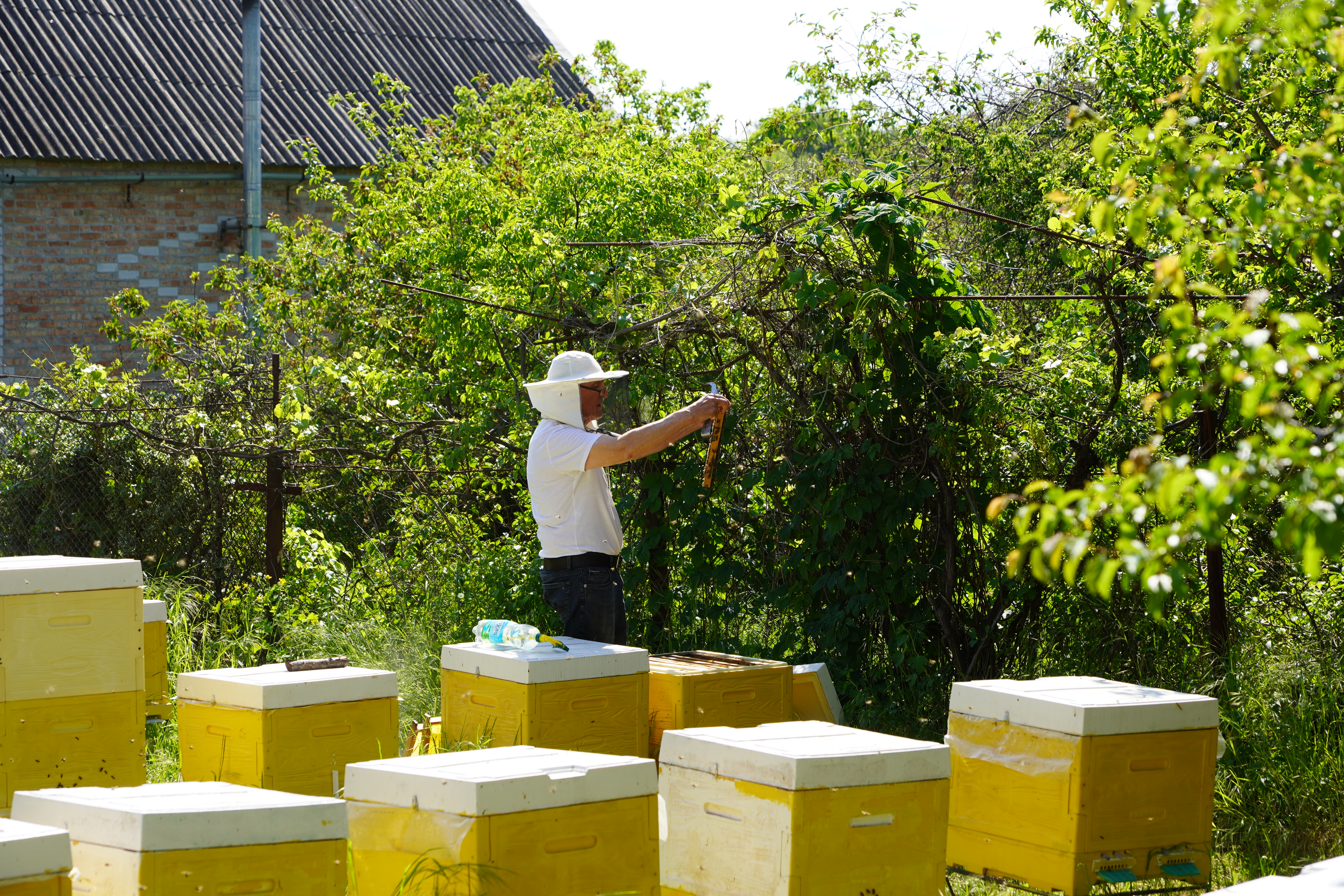
After being forced to leave Bakhmut in the Donetsk region, Inna and Anatolii settled in Zaporizhzhia where they currently rent an apartment. At the same time, in the village of Soniachne, they also rent a small house near their apiary, where Anatolii spends most of his time working with the bees. On the day of ERC’s visit, the weather was especially warm and sunny. The bees were actively buzzing around their hives as a nearby rapeseed field was in full bloom, providing them with nectar for honey production. In such moments, the couple is reminded of their life before the war – calm, familiar, and fully devoted to their own apiary.
Before the full-scale invasion, Inna and Anatolii lived in Bakhmut, where they had a well-established apiary and a stable client base. Beekeeping had become a family craft spanning several generations — Inna’s father had also developed this business and passed his love for it on to the next generation. However, during evacuation, they were unable to take the apiary with them and lost almost everything they had built over many years of work.
“I need bees – I need to keep living,” Inna recalls Anatolii saying.
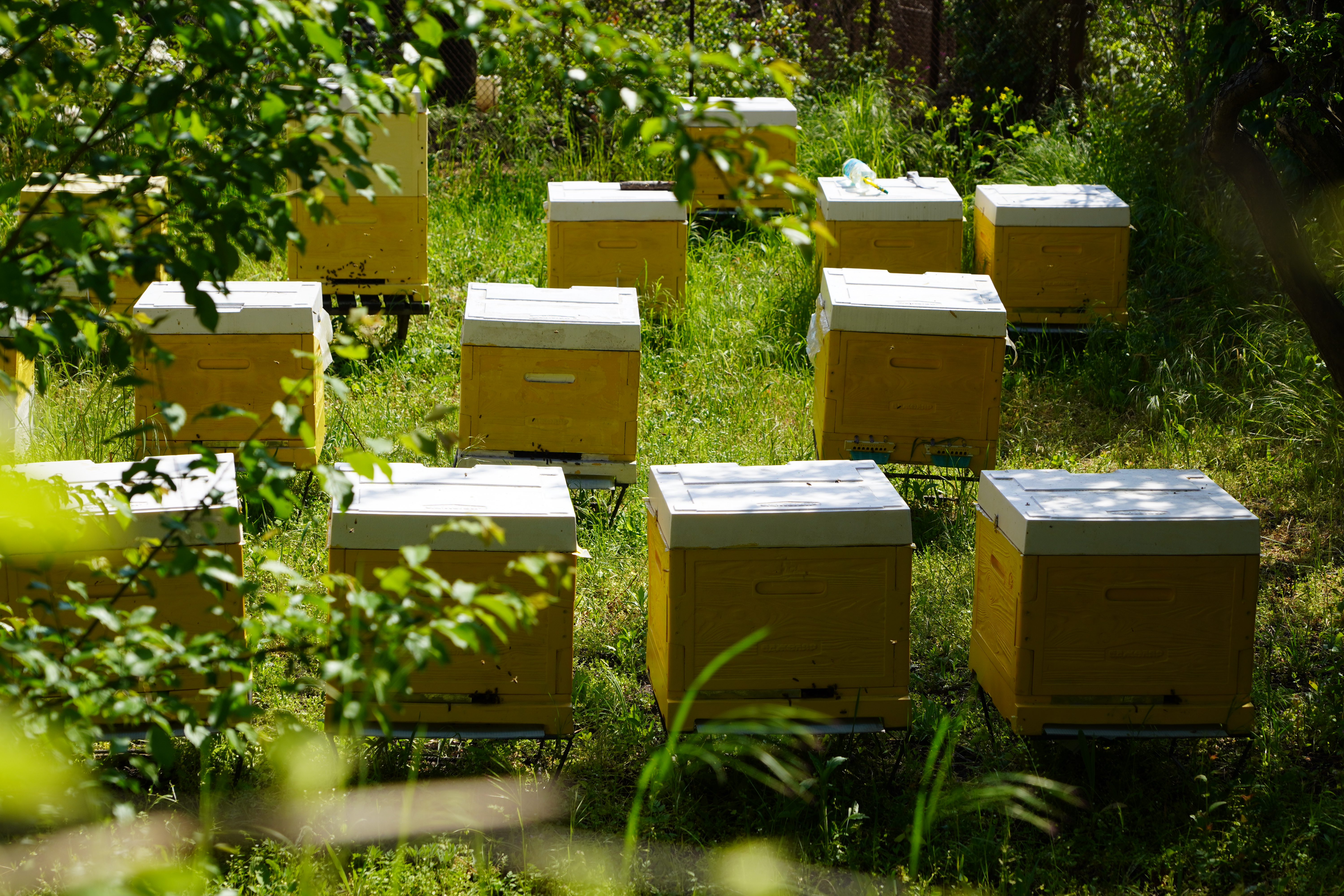
Today, the couple’s only stable income is a pension. One of their biggest financial burdens is rent. Due to the unstable security situation, the couple is afraid to “put down roots” in a new place, not knowing whether they might have to leave again. Despite this, Anatolii remains convinced that the apiary must be restored.
In autumn 2025, the family received a grant, funded by the European Union, to develop their own business through ERC’s “Emergency Livelihoods Support Programme,” in the amount of 29,000 UAH (almost 600 euros). Due to the seasonality of beekeeping, they could not start operations immediately — bees do not generate income in winter, and the prolonged cold season and late spring brought additional challenges: one of the bee colonies did not survive the frost. Nevertheless, with this support, the family was able to purchase hives, bee colonies, and foundation sheets – everything needed to expand the apiary.
“29,000 hryvnias for a business is just a drop in the ocean. But for us it means a great deal, because we are not able to save up such money ourselves,” Inna shares.
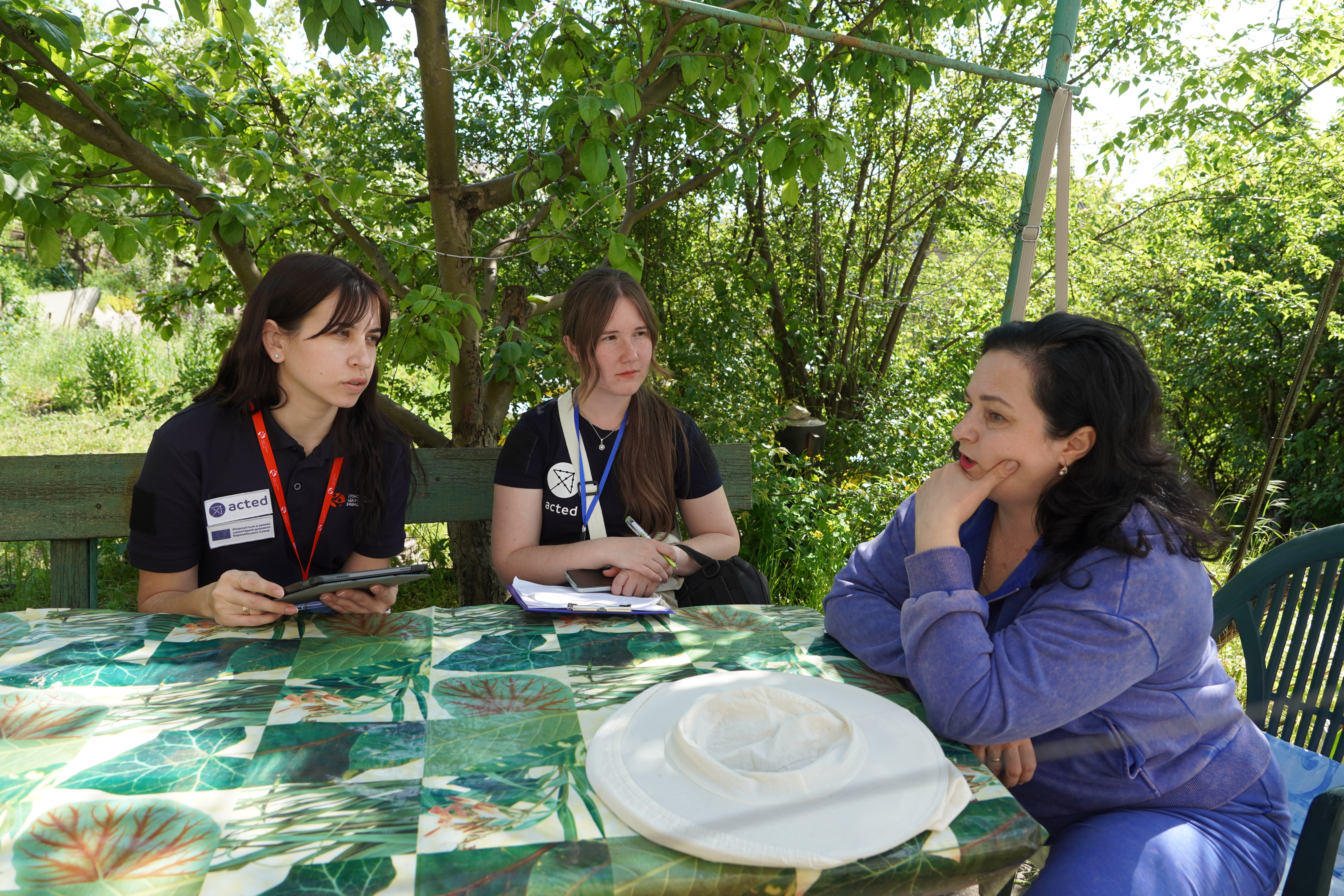
The family expects their first income from the new apiary this summer and autumn. The beekeeping season starts in March, and the first honey – spring honey – is harvested in early June. Inna considers it the most valuable and hypoallergenic type of honey, followed by wildflower and sunflower honey. Ideally, honey is extracted three times per season, although results depend not only on the beekeepers’ work but also on weather conditions and the crops planted by local farmers.
The couple is already thinking about the future and expanding their work. They dream of having their own land, producing propolis and medicinal honey-based tinctures, broadening their product range, and creating special relaxation gazebos for apitherapy. Inna also wants to focus on product presentation – attractive jars, labels, and packaging.
They plan to sell their products wholesale to enterprises and through online platforms, and they already have regular customers from Odesa. At the same time, sharing honey with family and friends remains especially meaningful to them.
Inna helps her husband at the apiary, although she admits she is still afraid of bees. She says honey extraction is physically demanding – one frame weighs about four kilograms. Yet despite the difficulties, the apiary means more to the family than just work.
“I love spring the most, when the bee colony grows and develops. You can see the result of your work. It’s a whole day spent in nature, in the fresh air,” says Anatolii.
For Inna and Anatolii, the apiary has become not only a potential source of income, but also a way to regain a sense of stability and continue a lifelong family tradition.
The Estonian Refugee Council, with support from the European Union and in partnership with Acted, is implementing the “Emergency Livelihoods Support Programme.” The programme is aimed at assisting people affected by the war. It supports vulnerable households in restoring or starting livelihoods, creating new sources of income, and strengthening financial resilience in Dnipropetrovsk, Donetsk, and Zaporizhzhia regions.
More information about ERC’s programme is available here: https://lh.pagulasabi.ee/uk/els-ukraine