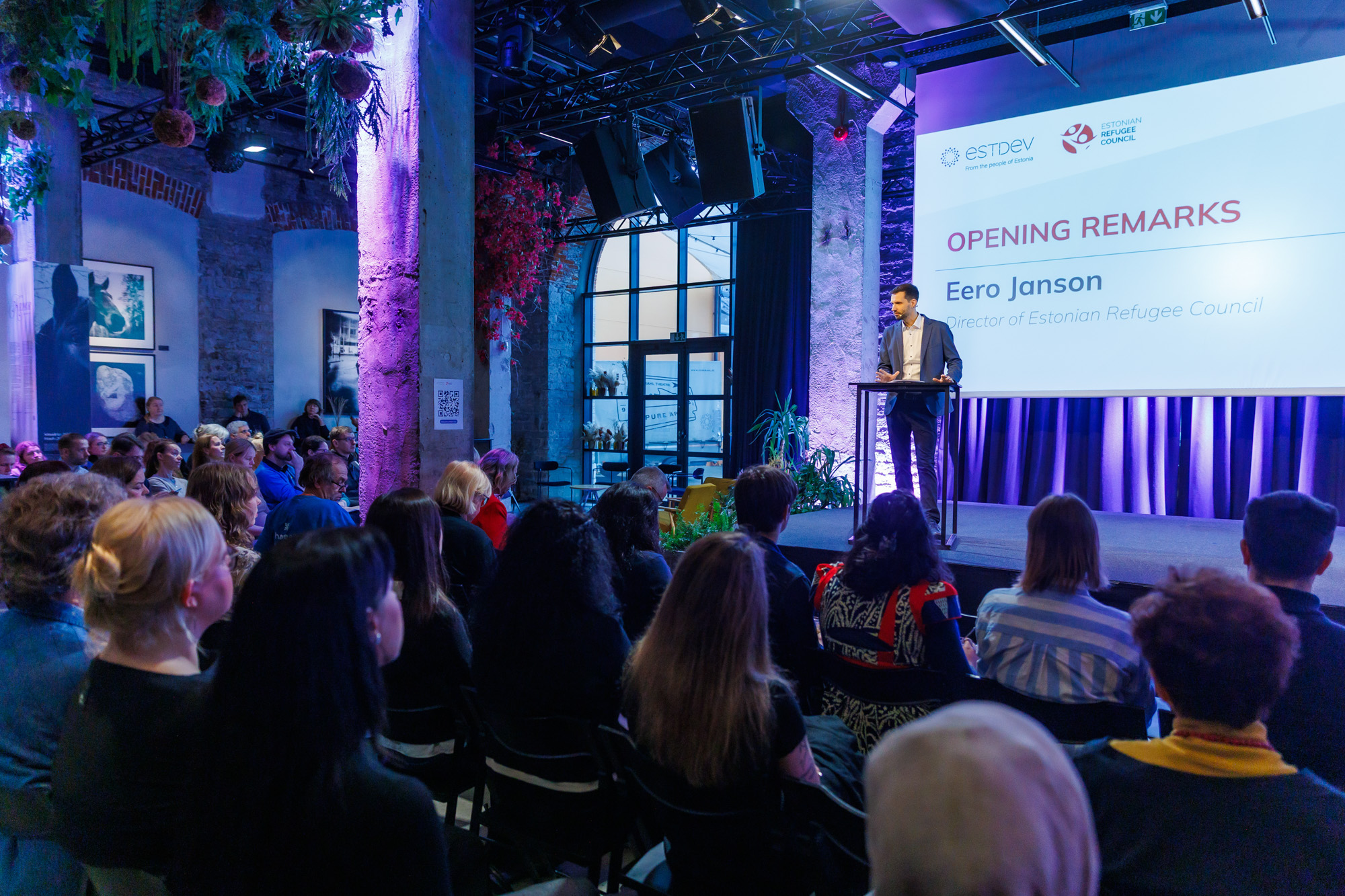
On 5 November, the Estonian Refugee Council’s Tallinn Humanitarian Conference returns for its fourth edition. This year we explore three urgent themes shaping the future of humanitarian action: reforming a system under growing strain; protecting people in an increasingly data-driven sector; and rethinking who leads and delivers humanitarian response.
A changing geopolitical environment, constrained resources, and growing humanitarian needs are reshaping how organisations approach the funding, delivery, and leadership of aid. This conference brings together diverse perspectives to explore how the sector can navigate systemic change, growing data and protection risks, and complementaries between international, national, and local actors.
Now in its fourth year, the conference brings together experts from international organisations across the world to discuss the development and future of humanitarian action.
Among the organisations represented will be VOICE EU, ODI Global, CALP Network, ALNAP, The New Humanitarian, Support to Life, Norwegian People’s Aid (NPA), and the United Nations Office for the Coordination of Humanitarian Affairs (OCHA).
Featured topics:
- Reform or Retreat? The Future of Humanitarian Action After the Reset – Is the “Humanitarian Reset” a genuine reform agenda, or is it the language the sector now uses to make underfunding, shrinking mandates and harder prioritisation sound strategic? What kind of reform do we really need, and is the sector actually able to reform itself.
- No Consent in a Food Line? Data Protection and Power in Humanitarian Aid – Humanitarian organisations increasingly need interoperable data systems to coordinate, reduce duplication and deliver at scale. But if beneficiary data becomes a target, when does collecting more data stop being responsible?
- Sidekicks, Leaders, or Subcontractors? Rewriting the Humanitarian Division of Labour – As humanitarian reform shifts from localisation to complementarity, this panel asks whether local actors, INGOs, the UN and donors can build a more honest division of labour – or whether the new language simply masks hierarchy, retreat and risk transfer.
More info and registration on the Estonian Refugee Council’s website.
Join the events also on Facebook and LinkedIn.
The conference will be held in English.
The event is supported by ESTDEV – the Estonian Centre for International Development.