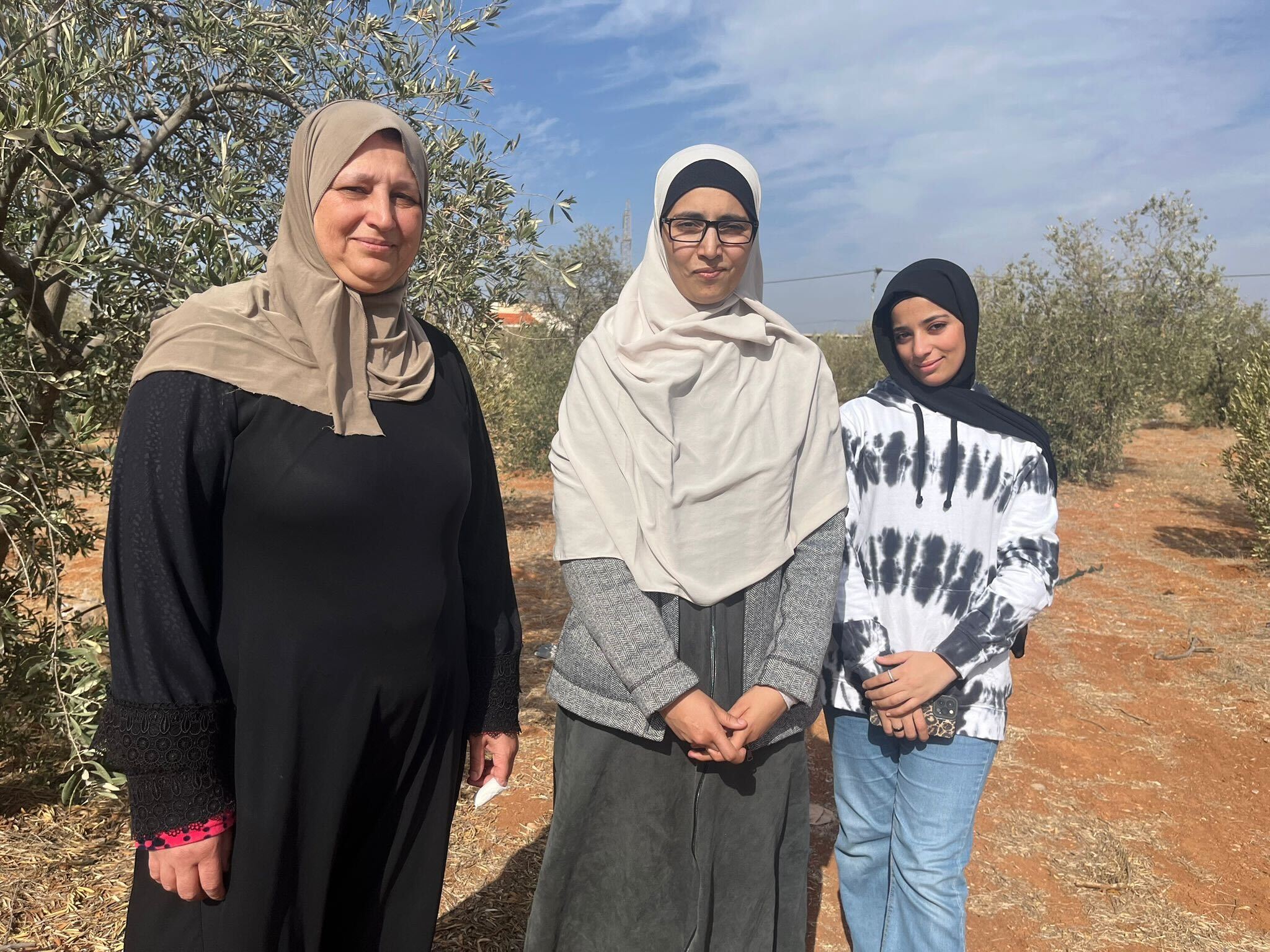
Jordan is one of the world’s largest refugee-hosting nations and also one of the most water-scarce countries, and therefore needs support to cope. This November marked the completion of a programme in Jordan that helped Syrian refugee and local women-headed households in vulnerable situations to become more self-reliant by using smart and climate-friendly agricultural methods. In total, we trained 50 vulnerable women, and built hydroponic greenhouses for 12 of them to use.
One of the key elements of the project was knowledge-sharing: we initially trained ten representatives from women’s community organisations, who in turn helped train 40 women to increase their understanding of water-efficient agriculture. In addition, we selected 12 women from among them and built six hydroponic greenhouses in total, which they share among themselves.
The hydroponic greenhouses enable women to grow food for their families or earn income by selling it. Participants highlighted that the training introduced them to modern agricultural methods, innovative ideas, and practical skills essential for generating sustainable income. They emphasised that hydroponics offers an efficient, water-saving approach well suited to Jordan’s conditions, and is particularly valuable for women, families, and future generations.
Many noted that the training gave them new knowledge, opportunities to improve their standard of living, and motivation to succeed. Although some mentioned that additional training could deepen these skills further, participants generally considered hydroponics an important and modern method of farming.
We also asked the women taking part in the programme how they have been managing with the greenhouses so far and what they are growing. Participants have cultivated a variety of crops, including red lettuce, cucumbers, and beans – the latter being one of the most popular crops in the region.
For the upcoming season, the women expect a significant increase in income. Around 16.7% expect a 35% rise in yields, half anticipate at least a 40% increase, and 33.3% project an increase of 50%.
The Estonian Ministry of Foreign Affairs met with the local community
During a monitoring visit, Maris Tippo, Director of the Humanitarian Aid Division, and Senior Specialist Maari Ross from the Estonian Ministry of Foreign Affairs visited the Estonian Refugee Council’s office in Jordan. They received an overview of our activities on the ground and met both the Jordan office team and the vulnerable women supported through the project.
Maris Tippo emphasised: “The visit showed how difficult it is to cope in the rapidly changing situation in the Middle East, both for Syrians who have fled the civil war to neighbouring countries and for the communities hosting them. It is clear that both sides need support.”
Jordan has received hundreds of thousands of Syrians
As of the end of 2025, Jordan remains home to more than 400,000 Syrian refugees who were forced to leave their homes due to nearly 14 years of civil war. Although many returned to Syria after the fall of Bashar al-Assad’s regime in December 2024, most have remained in Jordan and continue to face multiple challenges, such as limited access to work, education, and healthcare.
Women, in particular, are in a highly vulnerable position as they carry responsibility for their families while facing restricted opportunities and resources in a new environment. Jordan has become a safe haven for many of them, as they strive to build stable lives and secure their families’ wellbeing. Through this project, we supported these women so they could become self-reliant, develop skills, and establish sustainable sources of income.
The Estonian Refugee Council’s activities in Jordan are supported by ESTDEV – the Estonian Centre for International Development.