
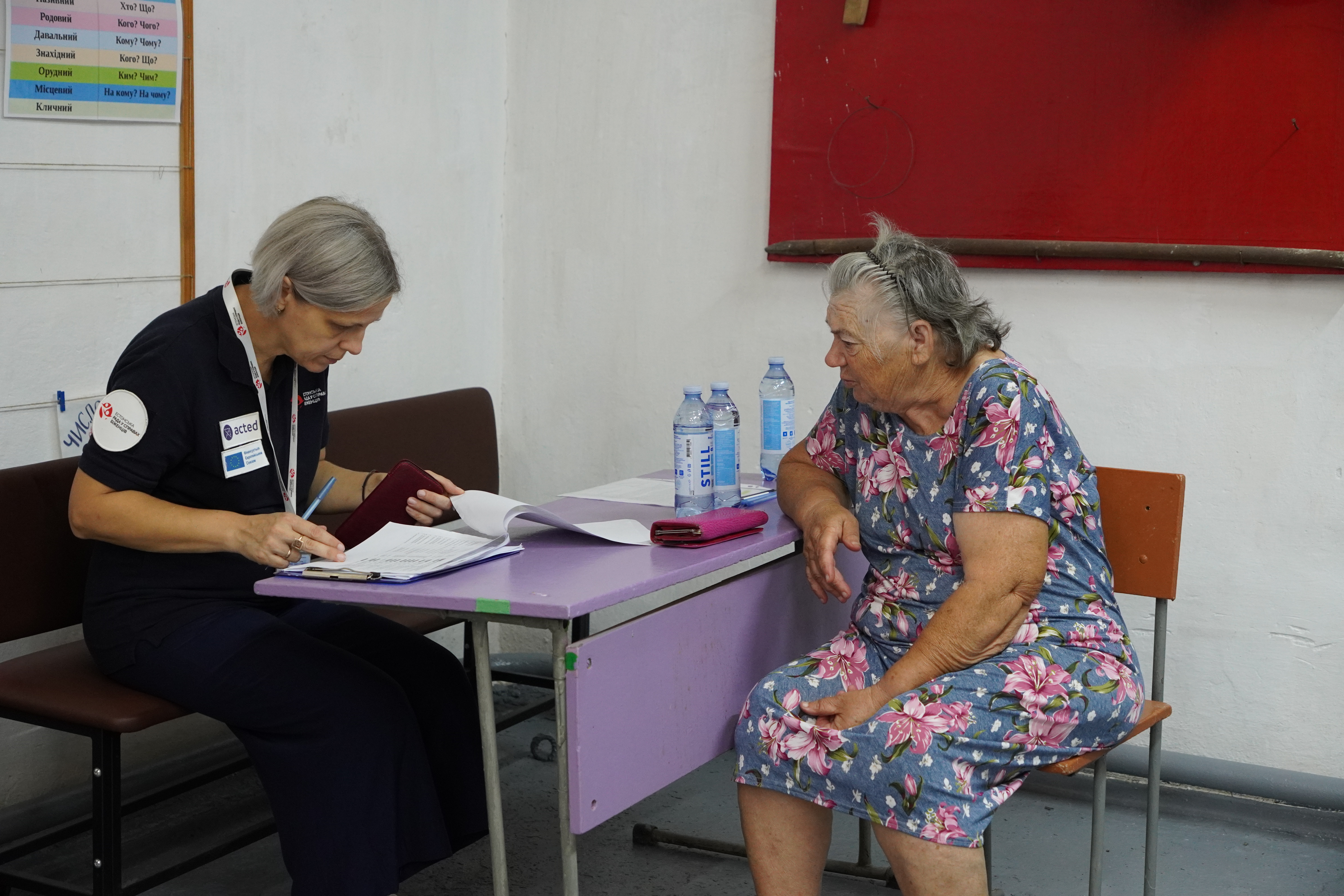
On 6 December this year, the Estonian Refugee Council (ERC) marked 25 years of working alongside people who have lost their homes and sense of security. Founded in 2000 and certified by the European Union, ERC has grown into the largest humanitarian organisation in the Baltic region, providing rapid emergency assistance and supporting people in rebuilding their lives in various crisis zones.
According to Eero Janson, Director of the Estonian Refugee Council, today’s world demands more from humanitarian organisations than ever before – and in extremely challenging conditions. “The war in Ukraine will soon enter its fourth year, having forced millions of people from their homes. In Gaza, the humanitarian crisis has reached unprecedented levels: hospitals are operating at minimal capacity, and an entire generation of children lives in constant insecurity. In Sudan, the conflict has escalated into one of the world’s largest yet least-discussed crises, leaving tens of millions of people without food, safety or basic necessities.
At the same time, climate change is causing increasingly severe floods and droughts across Africa and Asia, destroying traditional ways of coping and deepening regional instability. And this list is far from complete. The problems are growing even as global humanitarian funding declines. In the midst of these crises, the role of the Estonian Refugee Council and other humanitarian organisations is not only to provide urgent, life-saving aid, but also long-term support that helps people rebuild their lives,” Janson added.
The Estonian Refugee Council was established 25 years ago to support and advise asylum seekers living in Estonia. Over the years, its work in Estonia has expanded to include supporting the integration of people with a refugee background, public awareness-raising, advocacy, community activities, labour market and integration training, youth work, language-learning support, mental health assistance and more. In 2014, ERC began operating outside Estonia as well, providing essential assistance to internally displaced people in the Zaporizhzhia region of Ukraine. In 2025, ERC is active in Estonia, Ukraine, Armenia, Georgia, Jordan, Syria and the occupied Palestinian territories. Previously, the organisation has also worked in Lebanon, Turkey and Kenya.
The global humanitarian landscape has changed dramatically over the past quarter century: in 2000 there were over 38 million forcibly displaced people worldwide; by 2025, that number had risen to more than 123 million. Over its 25 years of activity, the Estonian Refugee Council has helped 470,000 people affected by crises both in Estonia and around the world.
To mark its 25th anniversary, the Council has published a digital book presenting the situation in Estonia and elsewhere during its early years, the key figures involved in establishing the organisation in 2000, and the major milestones achieved over the past quarter century, together with the global context. The book is available on the Estonian Refugee Council’s website.