Countries
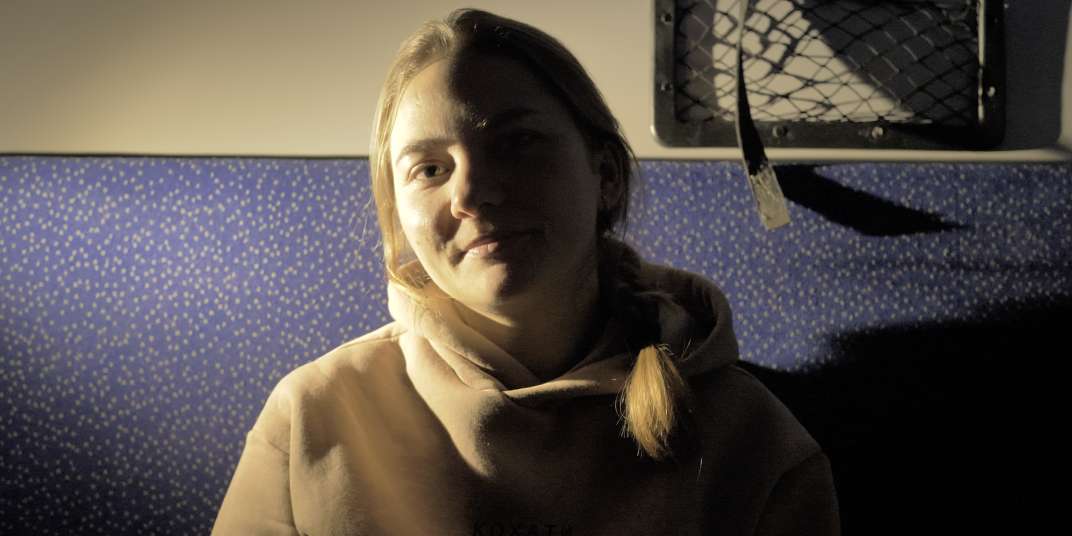
24 February 2026, marks four years since Russia’s full-scale invasion of Ukraine. That is almost one and a half thousand days of fear, uncertainty, and instability. During this time, millions of Ukrainians have had to adapt to attacks and extreme conditions, and for many, even leave their homes. Kristin Västra, private donations officer at the Estonian Refugee Council, spoke with young Ukrainian musician Bohdana on a train to Kharkiv at the end of January about what the war means for Ukrainians and how they are coping.
Bohdana was still an optimistic music student in February 2022, when the full-scale war began. On 23 February, she finished a late-night rehearsal and went home. Feeling tired, she postponed buying water until the next day. But that “tomorrow” never came as expected — the following morning brought explosions. The war had begun.
The conversation with Bodhana took place on Monday, 25 January 2026, aboard a train from Warsaw to Kharkiv. The joint journey lasted till Kyiv, from where Bohdana travelled on to Kharkiv to visit her parents. The train on the same route on the next day was hit in a Russian attack.
A lost sense of stability
“You asked if I dream about stability. I think the last stable time for me was when I finished school. Back then, I believed the best years were ahead. Then came the COVID pandemic, and later the war. For my family, instability began even earlier — in 2014.
“My mother is from the Luhansk region, and my grandmother remained there after 2014, living in an area under Ukrainian control. After the full-scale war began, she developed cancer due to the extremely high levels of stress. My parents brought her to Kharkiv so she could receive treatment there, but it was too late – she was too weak to undergo surgery. She passed away at the end of 2024,” Bohdana says.
Why don’t people leave?
Life in Ukraine is dangerous, both in frontline areas and in the capital, Kyiv. “People often ask me, ‘If it’s so dangerous, why don’t they just leave?’ My parents are 60. They have built their lives in Kharkiv. My father built our house with his own hands. My mother is a university professor. They have work, a garden, a dog, and their daily routines. Where should they go? Kyiv? That city is bombed too.
If you are 20 and everything around you is destroyed, maybe you leave. But if you are 60 and have built your home with your own hands, it’s not just a building — it’s part of your identity.”
Farming and gardening hold deep meaning in Ukraine: owning land, growing potatoes, tomatoes, and flowers gives people purpose. Each growing season is meaningful. “If these people left, what would they do? Sit in someone else’s apartment and just wait for the war to end? People need to feel that they matter, that their life still has purpose.
My grandmother, even after losing her sight, kept planting new crops every summer. Every year she said it would be the last, but she kept going. It gave her strength. Being in your own home, even if it’s dangerous, keeps you rooted. In someone else’s home, even if the people are kind, you feel temporary.”
“Two days ago” (the conversation took place on 25 January), “Kharkiv was bombed 25 times overnight. A colleague from the Opera House asked me why I was going to such a dangerous place. I told her, because I know I have the chance to go home today. I don’t know if I’ll have that chance tomorrow,” Bohdana shares.
Wanting to stay close to Ukraine
Bodhana has been living in Warsaw, Poland, for some time. “In Poland, people asked me, ‘What will you do in three months? In six months?’ That felt so strange. I don’t even know what will happen tomorrow. For us, planning six months ahead feels unrealistic.
That’s why I stayed in Poland — to be as close to Ukraine as possible. My parents still live in Kharkiv. You know the situation there. It used to be worse, but it’s still very difficult. I didn’t go too far, because I felt I needed to be able to reach them if something happened. Of course, it’s probably just an illusion that I could actually help. But it’s an illusion I need.”


