Image
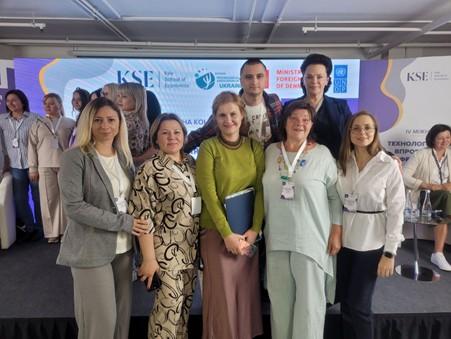
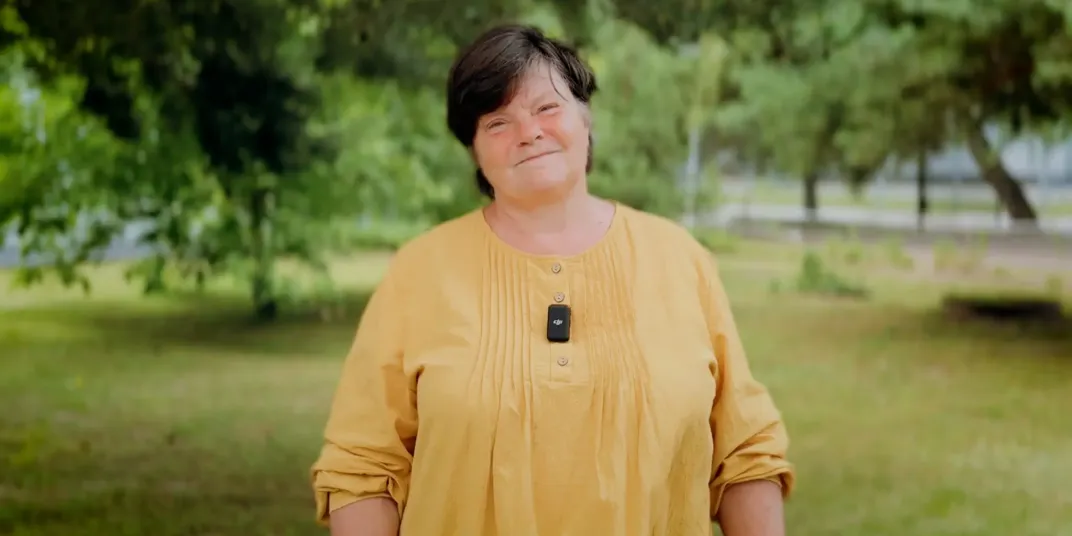
Amid the ongoing war and displacement, access to mental health support can be life-saving. In cooperation with the Ukrainian National Psychological Association, the Estonian Refugee Council relaunched its mental health support hotline last spring, offering psychological assistance to Ukrainians in Ukraine and across 20 other European countries. One of the hotline’s consultants, Olena Bohdan, shares her story of supporting others while navigating the personal hardships of war herself.
My name is Olena Bohdan. I was born in Chernihiv, but I have been living in Kyiv for more than forty years. Because of my professional and social engagement, I have many friends and colleagues across different European countries who invited me to join them when the full-scale war began. I chose to stay in Kyiv – this is my place, my choice.
I have a very difficult family situation. My husband was killed at the beginning of the full-scale war in Bucha, Kyiv oblast. My son, who volunteered to join the army, was killed in action in April 2025. He left three children; the youngest boy is six years old now. Their mother is also in the military and is currently at the frontline. That is why I try to spend as much time as possible with my grandson. Right now, he is with me in the Carpathians.
We spend a lot of time walking in the mountains, talking, and reading books together. This kind of connection is deeply nourishing for me. I also love swimming – it is a shared hobby that my grandson and I enjoy in the summer at our country house. We swim, ride bicycles, collect mushrooms in the forest, and jump on the trampoline together. These are simple joys of everyday life, yet they bring happiness and restore my vital energy.
I have been working in the field of psychological services for thirty years. I began focusing specifically on crisis support after 2014, following the Revolution of Dignity. I have been working on the crisis psychological support hotline since its very beginning in June 2022. Before that, I led volunteer projects organising psychological support groups and providing individual crisis counseling, among other initiatives.
I started doing this because it was my way of responding to the stress of war. It is important for me to feel personally engaged, to be useful. And it is important for me to know that I am doing what I am meant to be doing.
What kinds of problems or emotions do people most often share when they call the hotline, and how has this changed over the past months of the war?
In terms of emotions, people most often share complex emotional responses to the challenges of war, spanning a very wide spectrum – from anger and aggression to apathy, depression, and even suicidal ideation. Recently, exhaustion and emotional dysregulation have become increasingly pronounced. People talk about chronic sleep deprivation and sleep disturbances caused by frequent air attacks and air raid alerts, especially at night. Power outages and the loss of everyday comfort – electricity, internet, water, gas, heating – also take a significant toll.
Very often, people call in need of immediate stabilisation due to panic attacks. These arise as a result of emotional imbalance, exhaustion, and the overwhelming number of “red buttons” that trigger such reactions: the sound of an air raid siren, loud noises outside, even the anticipation of another sleepless night and the fear of intrusive, spiraling thoughts.
In terms of problems, the most common themes are uncertainty and a sense of disorientation. People have lost their familiar life reference points and cannot rely on plans for the future, because that future is unclear and, more often than not, frightening. Previous life experience is of little help, as peacetime strategies are not very applicable in a war context. People most often speak about internal tension or tension in relationships.
Another significant challenge is parenting. Children are also struggling deeply with the realities of war – both in Ukraine and abroad. In such cases, we provide crisis support, offer initial “orientation markers” to help navigate the situation, and then refer families to the Voices of Children platform.
Can you describe a typical call? What are people looking for when they reach out to you?
Each call is both typical and atypical at the same time, because every human life is unique. One recent call was striking in its many layers.
A woman of mature age called; she had recently moved from eastern Ukraine to a small town in central Ukraine. Back home, she had been socially active and volunteered extensively, including helping with evacuations – often guiding people through rough terrain under the sound of military shelling. This is the reality of civilian life near the front line. She moved because her daughter had just given birth and needed support.
The woman found a job as a shop assistant in a local store and began building relationships with local residents. One evening, a group of teenagers decided to “play a joke.” At dusk, when there were few people outside and it was easy to hide in the shadows, they set off firecrackers near the entrance to the shop. They were curious to see how the “newcomer” would react. The woman’s well-established survival instincts were instantly activated: she threw herself to the floor and shielded her young colleague with her body. Shortly afterward, she suffered a heart attack. An ambulance and the police were called, and there was a difficult conversation with the teenagers and their parents. Many parents defended their children, saying they were “just teenagers” and “just playing.”
The woman’s request was to return home – to that “war canonade,” where it was objectively dangerous, but where she clearly knew what to do. Here, in the relative calm of this small town, she felt alien and unnecessary.
This sense of “otherness” is typical both for internally displaced persons and for those who have found refuge outside Ukraine. During conversations, people often voice a longing to be at home, despite the war, and speak about misunderstandings with local residents. Bullying – such as the teenagers’ “joke” – is also frequently mentioned by both children and adults.
Reactions to the “war inside,” meaning the automatic activation of trauma responses to triggering stimuli – such as the woman’s reaction to the firecrackers – are also characteristic, especially among veterans who call the hotline. A pervasive sense of confusion and psychological exhaustion in the context of war is common, as for many Ukrainians the world itself seems to have lost its common sense.
What do you consider the most difficult part of this work, and what helps you cope with these challenges?
The most difficult situations are calls from people who are in a state of affect – intense emotional arousal – or who express aggression and irritability. Even when you understand that this is their pain crying out for help, it is not always easy to maintain emotional balance during the conversation and remain calm.
Experience helps. Most consultants on the hotline are now in their fourth year of work and have each conducted around one and a half thousand consultations.
How does the hotline support people who are living with prolonged stress, displacement, grief, or uncertainty about the future?
When stress is prolonged, we aim to stabilize the person and, together, identify existing and accessible resources – communication with others, pets, walking, nature, household routines, and so on. If a person has experienced displacement, we look for “islands of stability” and “zones of comfort” in the new environment.
In cases of grief, especially grief after loss, we provide support simply by being present. Listening is essential here. In situations of uncertainty about the future – which applies to most callers – we try to find at least a small “zone of personal control”: a daily routine, caring for loved ones, or a work-related project. This gives the person something to lean on – an “island of organization” that they create for themselves.
What would you like the general public, including the international community, to understand about the mental health needs of people living through the war in Ukraine?
The situation itself is abnormal by any global standard. People’s reactions to it, however, are normal. Anger or sadness, irritability or apathy – these are all normal responses to an abnormal situation. Not everyone can cope with this on their own, which is why unity and support are essential.
Right now, Ukrainians are the ones living in these extremely difficult conditions. But similar circumstances could affect anyone – the world is truly unstable at the moment. By supporting Ukrainians and showing tolerance toward their emotionally dysregulated reactions, the world is, in fact, helping itself – working toward a more humane, resilient, and cohesive future.
Where do you find strength and inspiration in such difficult times? What helps you keep going?
My personal source of strength is conscious, meaningful activity. I am engaged in what I feel to be my life’s work. In addition to working on the hotline, I participate in recovery projects for Ukrainians affected by the war. For example, I am currently involved as a trainer and psychotherapist in a recovery programme for women and children from the Kharkiv region.
Connection with nature helps me greatly, as does communication with active, caring people. Together, we are fighting for the right to dignity, freedom of expression, and human connection.
The work of the NPA Psychological Hotline is implemented in partnership with the National Psychological Association of Ukraine and made possible thanks to funding from ESTDEV – Estonian Centre for International Development.


