Countries
- In Estonia, Estonian language sessions for young people aged 13–18 continue, based on the immersive language-learning methodology developed by Tallinn University.
- In November, more than 320 people took part in adaptation trainings in Estonia. Trainings related to residence permits remain the most popular.
- In Ukraine, entrepreneurship training began for 105 entrepreneurs to help people affected by the war create or develop a sustainable source of income.
- In November, we provided winter heating assistance to a total of 2,260 families.
- In Armenia, three greenhouses were completed at schools in the Tavush region, and 400 students received environmental training.
- In Jordan, a project supporting vulnerable women-headed households in achieving independent livelihoods through smart and climate-friendly agricultural practices was completed.
- In Syria, we provided cash assistance to people in the city of Latakia to help them meet their basic needs following the wildfires.
Ukraine
We provide cash assistance, which allows people affected by the war to purchase food, medicines, hygiene products, and other essentials. As of now, we have provided cash-based assistance to more than 315,000 conflict-affected people, worth more than 58.6 million euros. Cash assistance is provided for three months, with the support of 3600 Ukrainian hryvnias per household member per month, equivalent to about 73 euros. Registration for assistance is carried out through Estonian Refugee Council's local registration points or via the online application platform. Currently, our focus is on assisting those in need in frontline areas in Zaporizhzhia, Donetsk, Luhansk, Kharkiv, and Kherson oblasts. The programme is supported by the European Union, the US Government, and the Estonian Ministry of Foreign Affairs. Acted is the lead partner for EU and US-supported projects.
We are supporting both new and existing businesses across five regions – Poltava, Kirovohrad, Cherkasy, Dnipro, and Kharkiv through a self-employment programme which allows people to take part in online business trainings, get mentoring support and receive business micro-grants. In November we launched resilience business training for 105 recipients, focusing on strengthening their mental health and entrepreneurial capacity. Distribution will begin in December. The project is developed in partnership with Acted and supported by the US Government.
We support livelihoods related to agriculture, livestock, food production, and various services through emergency assistance, with the aim of strengthening people’s self-reliance. The average amount of support is around 700 euros. In November, we provided cash-based humanitarian aid to 153 families from Poltavska, Kirovohradska, Cherkasy, Zaporizska oblasts. The programme is funded by the European Union, US Government, and the Ministry of Foreign Affairs of Estonia.
This winter, we will assist over 5,000 vulnerable families with heating aid. Since the start of the winter response period this season, 2,580 vulnerable families have received cash assistance. We are providing both financial and in-kind support to help cover rising heating costs and ensure fuel supplies for the winter. Distribution began in October, focusing on frontline and hard-to-reach areas in Eastern and Southern Ukraine, specifically in Donetsk, Kharkiv, Kherson, Luhansk, and Zaporizhzhia oblasts, where intensified hostilities and damaged infrastructure have severely hindered people's ability to meet their basic winter heating needs. The programme is supported by the European Union, the US Government, the United Nations Office for the Coordination of Humanitarian Affairs (OCHA) through the Ukraine Humanitarian Fund (UHF), and the Estonian Ministry of Foreign Affairs. Acted is the lead partner for EU and US-supported projects. National NGOs Shchedryk and Peaceful Heaven of Kharkiv are the sub-implementing partners for the UHF project.
We provide psychosocial support via a mental health hotline for Ukrainians living both in Ukraine and abroad to support the people affected by the war. In the past seven months nearly 3,500 calls have been made on the hotline. The work of the NPA Psychological Hotline is implemented in partnership with the National Psychological Association of Ukraine and made possible thanks to funding from ESTDEV – Estonian Centre for International Development.
Estonia
Through the Language Ladder programme, we support Ukrainian refugee youth in language learning and social integration. Read more on the website of the Estonian Refugee Council. In November, we continued with the implicit language learning methodology meetings meant for young people aged 13–18 and developed by Tallinn University. In Tallinn, four groups meet weekly, and in Jõhvi two. The project is being implemented in collaboration with Tallinn University and the Polish organisation Dobra Fabryka. Funded by the European Union. Views and opinions expressed are however those of the author(s) only and do not necessarily reflect those of the European Union or European Social Fund Agency. Neither the European Union nor the Granting Authority can be held responsible for them.
We conduct monthly adaptation support training sessions on various subjects, including use of e-services, parenting, education system, adaptation of pensioners, legal matters, entrepreneurship, medical and social system, labour market, as well as legal foundations and residence permits. The training sessions take place across Estonia, both in face-to-face and online formats. In November, more than 320 people took part in training sessions. Training sessions on residence permits continued to attract the most interest, which shows that the topic remains highly relevant. Since 2022, a total of nearly 12,800 people have participated.
We provide counselling by appointment at the Estonian Refugee Council office (Vambola 6, Tallinn) every day from 10 am to 5 pm. Our information hotline is open to all refugees, as well as institutions and individuals assisting them, at +372 5881 1311 (Monday to Friday from 10 am to 5 pm), and via email at counselling@pagulasabi.ee. Additionally, counselling services are available on Viber, WhatsApp, and Telegram at +372 5464 0007.
We organise regular group activities and community events across Estonia. In November, more than 180 people with a refugee background from Ukraine and elsewhere took part in community activities. We organised language cafés in Tallinn and strategy game nights for the youth. We attended the PÖFF documentary Lost Stars of the Horoscope. In Ida-Viru County, we supported children and young people by running a tote bag workshop in Sillamäe and hosting a film night in Kohtla-Järve. In Tartu, we supported older people by offering digital skills training and watching Estonian films together. Community activities are supported by UNHCR, the UN Refugee Agency.
We are running the MindSpring group based programme for people with refugee backgrounds to help them adjust to life in a new country. In November, a new MindSpring group was launched for young people aged 13–18. The aim of MindSpring is to prevent mental health problems, strengthen coping skills, and provide social support. The programme is being implemented with the support of the Estonian Ecumenical Relief Organization (EERO Canada), funded by donations collected in Canada and the United States.
In cooperation with the Integration Foundation, we are launching training activities to strengthen the capacity of local governments in the fields of migration and integration. In November, training sessions were held for municipal officials and community representatives in Lääne-Viru and Ida-Viru counties. The next migration seminars will take place on 20 January in Haapsalu and 27 January in Pärnu. In total, 20 training sessions are planned across Estonia. The project is co-funded by the European Union through the Asylum, Migration and Integration Fund (AMIF) and the Ministry of the Interior.
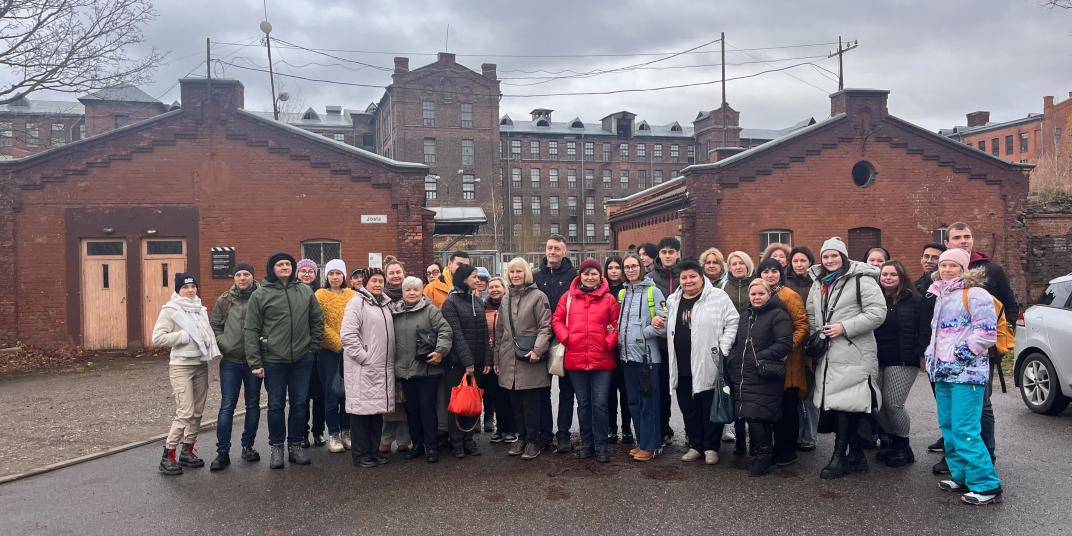
In cooperation with the Integration Foundation, we began organising various events across Estonia to increase the civic engagement of third-country nationals, including beneficiaries of international protection. The aim is to strengthen mutual understanding and trust, and to help third-country nationals cope better with everyday life and participate more actively in society. In November, we explored the history of Narva and Narva-Jõesuu and viewed archaeological finds collected by Aleksandr Openko. A tour of the Kreenholm Manufacturing Company introduced them to the impressive industrial heritage of the complex. In Pärnu, the focus was on developing parenting skills during a short training session titled “The Journey to Desired Parenting”. Participants also visited the Lydia Koidula Museum and enjoyed a boat trip on the Pärnu River, taking in the city’s beautiful views. At the seminar “Attention, Anxiety and Coping” held in Tartu, attendees learned about the causes of anxiety and practical ways to manage it. A ghost tour on Toome Hill led participants through Tartu’s legends and mysterious stories. Project no. AMIF.1.02.23-0005 “Cooperation activities to increase the civic engagement of third-country nationals, including beneficiaries of international protection” is co-funded by the Asylum, Migration and Integration Fund (AMIF).
Armenia
In Tavush region, three greenhouses are now operational, 400 students have received sustainable agriculture training, and three refugee people in a vulnerable situation have been employed to work in the greenhouses. In November, monitoring trips took place in all three schools and greenhouses to make sure the environmental trainings are integrated into practical lessons for students. Read more about the programme on ERC’s website. The programme is funded by the Ministry of Climate of the Republic of Estonia. Training sessions for the administrative staff and teachers are underway to provide practical knowledge and tools in addressing the challenges of climate change and enhancing student learning. The project is funded by Women’s Fund Armenia.
Thanks to funding from the European Union, we have launched four community councils to enable people with refugee backgrounds to voice their concerns, and take part in decision-making processes that affect them. During November, community councils held their regular monthly meetings: members got to know each other, learned about how the council operates, and elected co-chairs and the secretary. Capacity-building sessions on human rights, refugee rights, legal documentation took place. We are also running self-help groups that support the mental well-being of people with a refugee background and provide them with practical skills and support to start or restore small businesses and secure sustainable livelihoods. So far, we have started six groups in different locations. Two of these groups completed their work in November with 22 participants receiving certificates and being eligible for livelihood grants. Mentors continue providing support to all 27 grantees. The programme is funded by the European Union.
Georgia
We will support Ukrainian refugees living in Georgia this winter period with cash-based humanitarian assistance in meeting basic winter-related needs. The application period was finalised in November, and the programme will support approximately 180 families (more than 450 people) with a total of 1500 GEL (ca 480 euros) for three months.
Jordan
As of the end of November, a project in Jordan supporting vulnerable women-headed households in achieving self-reliance through smart and climate-friendly agricultural methods came to an end. During the project, we trained 10 Syrian refugee women and local women in vulnerable situations, who then helped deliver trainings to 40 additional women to increase their knowledge of water-efficient agriculture. In addition, we selected 12 women who can now grow food for their families – or earn an income by selling it – in a total of six hydroponic greenhouses. The activities of the Estonian Refugee Council in Jordan are supported by ESTDEV – Estonian Centre for International Development.
Syria
We registered an office in Syria to support people affected by the civil war and help them rebuild their lives. We will support people living in rural Latakia province to help them fight the consequences of the wildfires – 65 families will receive emergency cash assistance for a two month period. The programme is funded by the Estonian Ministry of Foreign Affairs and implemented in partnership with Finn Church Aid. The programme is funded by the Estonian Ministry of Foreign Affairs and implemented in partnership with Finn Church Aid.
Occupied Palestinian territories
We continued to distribute food aid in Gaza hospitals with the support of the Estonian Ministry of Foreign Affairs, ensuring daily meals for both patients and hospital staff working under extremely difficult conditions. The Ministry’s funding enabled the distribution of over 9,000 meals in different hospitals and medical centers across Gaza. WE have delivered over 12.000 meals between September and December thanks to the donations from Estonian people and the Estonian Ministry of Foreign Affairs. The programme is funded by the Estonian Ministry of Foreign Affairs and in partnership with a local organisation Gaza Soup Kitchen.
Additionally, we continue collecting donations in Estonia to supplement critical food aid given to people in the Gaza Strip. Donations can be made through the Estonian Refugee Council’s donation platform. More information is available on the Estonian Refugee Council website.


