
The first three months of this year have been very active at the Estonian Refugee Council, with our programmes in Estonia focusing on supporting Ukrainian refugee youth in learning Estonian and building their future here.
According to the young people themselves, one of the main challenges in learning Estonian is the lack of opportunities to practise the language, especially in Ida-Virumaa. Young people want to speak Estonian with their peers about everyday, real-life topics. However, many Ukrainians say they do not have local young people among their friends or acquaintances. Moreover, building social connections – making new friends and stepping outside the home–school routine – can be quite difficult for refugee youth. Having been forced to leave their familiar environment, they must build their lives from scratch in a new and unfamiliar cultural space. This is challenging for anyone, but even more so for teenagers and pre-teens.
Let’s take a closer look at what we did together with young people during the first three months of 2026.
From AI trainings to a creativity workshop
In January and February, Estonian language sessions based on the “invisible language learning” methodology developed by Tallinn University continued from last autumn. Their success lies in regularity and practicality – Estonian is learned through simple, often hands-on or physically engaging activities. An important aspect is that the activities are proposed and approved by the young people themselves. Active involvement and the opportunity to take on a decision-making role help maintain motivation and consistent participation. Facilitators also play a key role: they are close in age to the participants and communicate only in Estonian, leaving no alternative but to practise the language.
Young people in Jõhvi and Tallinn took part in MindSpring group sessions supporting mental health, where they could share their experiences in a safe environment and receive support from both peers and a mental health professional in dealing with stress, adaptation and concerns about the future.
In addition, during the first quarter we organised various trainings to support the integration and future prospects of young people with refugee backgrounds. Topics included the basics of entrepreneurship, further education opportunities, and artificial intelligence – something that can no longer be overlooked today. Through these trainings, we aim to provide both refugee youth and local Russian-speaking young people with knowledge and inspiration for making decisions about their future.
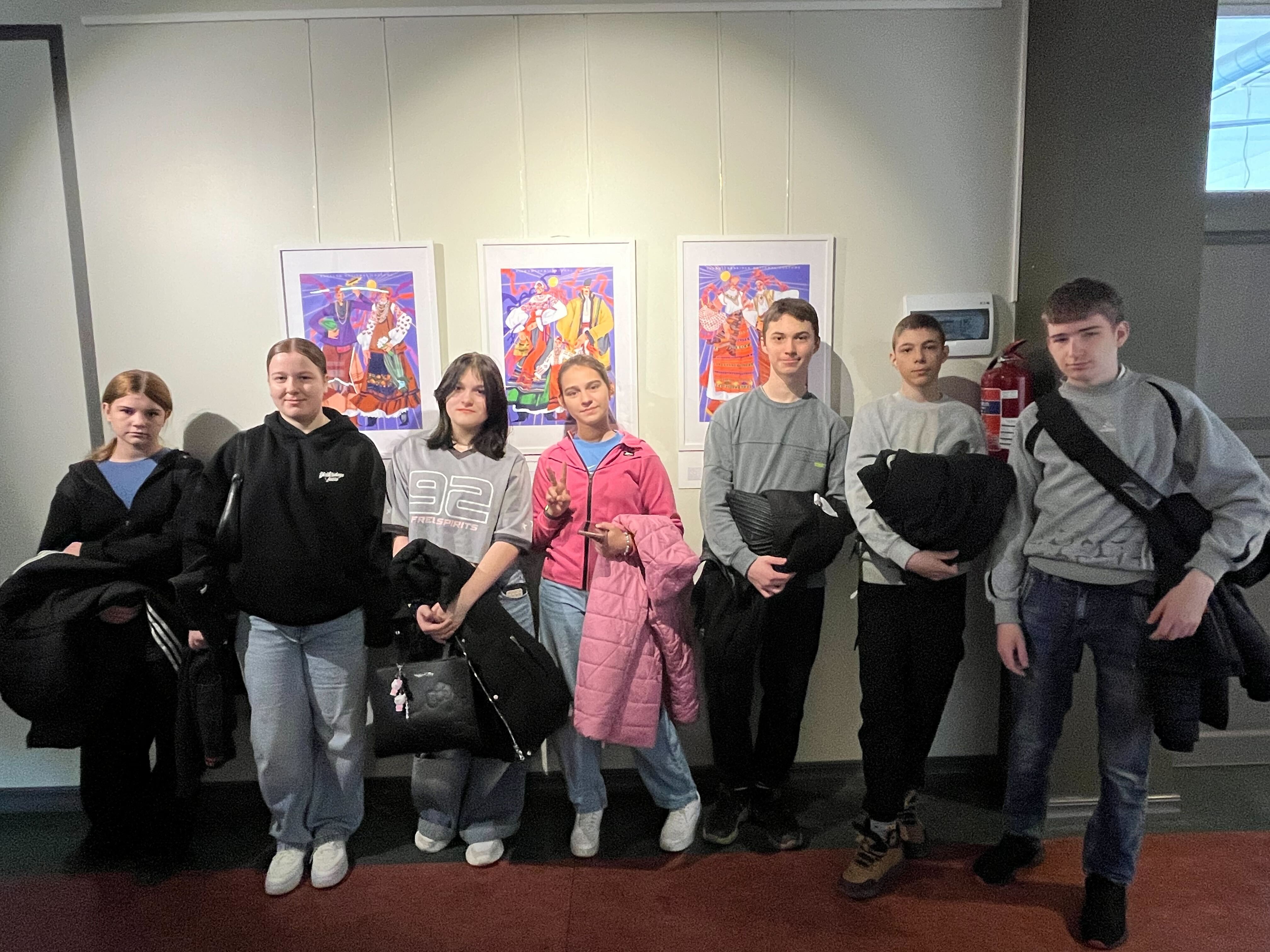
We also organised study visits. Young people from Ida-Virumaa visited two vocational education institutions in Tartu – the Tartu Vocational College (VOCO) and the Tartu Art School – where they were introduced to different fields of study. These visits help young people better understand the Estonian education system, explore opportunities and requirements, and broaden their horizons. At the end of March, an inspiration evening led by designer Kirill Safonov took place in Tallinn, where participants gathered in his studio to discuss how to use creativity to shape their future.
Work with young people, focusing on language learning and future opportunities, will continue until autumn 2026. Activities include language sessions, workshops, visits, inspiration events and psychosocial support groups. Alongside implementing these activities and creating opportunities for young people, the Estonian Refugee Council is also working on service design to ensure long-term impact, as well as communication activities to share knowledge about young people’s needs and experiences more widely.
Young people are satisfied
Feedback from participants has been very positive so far – 100% of respondents said they gained new or useful ideas from the activities, and 93% reported gaining inspiration for their future studies or career.
We also asked participants about their future plans. Many said the meetings helped them better understand what kind of work they would like to do. They also noted increased motivation and a sense of encouragement to move forward. Practical knowledge was also highlighted, such as how to write a CV and where to look for jobs.
Some reflections from participants:
“I enjoyed hearing about others’ experiences and getting inspiration for planning my future.”
“I was impressed by how many different study and career opportunities there are in Estonia.”
“I realised I can speak Estonian much better than I thought.”
You can also read more about one of the key elements of the project – “invisible language learning” – on the Estonian Refugee Council’s website.
The activities described in this article are funded by the project “Language Ladder: Learning And Nurturing Growth Using Adaptive Guidance & Education for Refugee Youth in Estonia and Poland”.
The project is being implemented in collaboration with Tallinn University and the Polish organisation Dobra Fabryka. Funded by the European Union. Views and opinions expressed are however those of the author(s) only and do not necessarily reflect those of the European Union or European Social Fund Agency. Neither the European Union nor the Granting Authority can be held responsible for them.
