
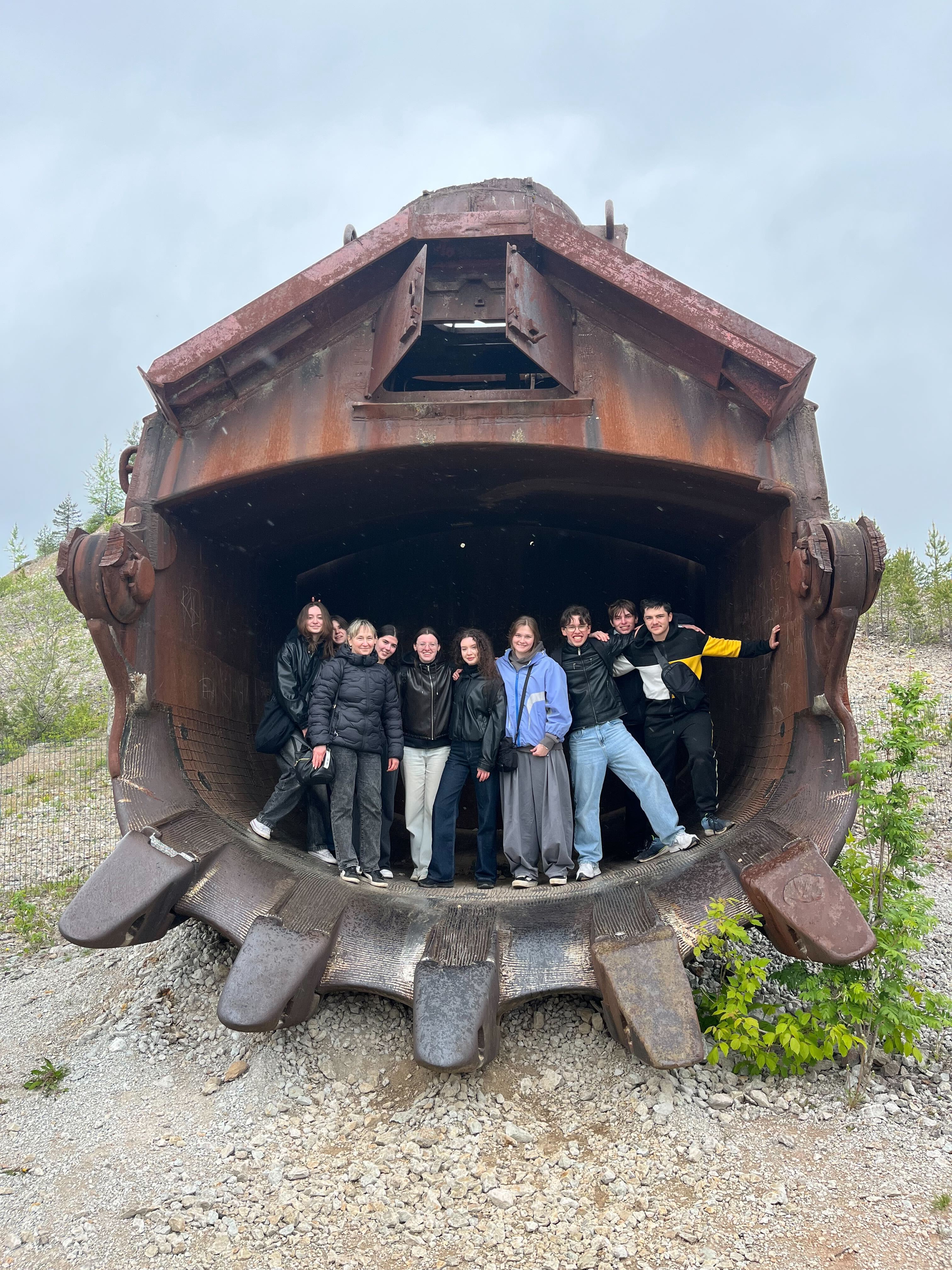
As October arrived, the "Language Ladder" project came to an end. Over the past year, we have supported young Ukrainians living in Estonia in learning Estonian, finding a sense of community and planning their education – all with the aim of helping them shape their future in Estonia. The language groups, camps, shared activities and events exploring educational opportunities organised throughout the project have given young people the chance to practise Estonian, make new friends and learn more about the opportunities available to them in Estonia.
Before the project comes to a close, we look back at the final three months, during which language learning and youth activities continued alongside advocacy work on education. The summer months brought plenty of shared experiences and new adventures, while September saw a renewed focus on adapting to school and brushing up on Estonian.
Engaging activities help young people learn the language
In July, the Estonian language group for young people in Pärnu, which had started in March, came to an end. It gave participants the opportunity to practise the language in a relaxed atmosphere. The final language group in Tallinn met in July and August. A total of 83 young people took part in a language camp at Avatud Kool. Learning Estonian was about more than vocabulary and grammar: it was equally important for young people to use the language in natural settings and interact with their peers. For their final meeting, for example, the group visited an alpaca farm, where they enjoyed a memorable experience together.
July also marked the end of the final boys’ group in Jõhvi, which provided support for mental wellbeing. The sessions followed the MindSpring approach, led by a facilitator with a similar background and experiences, who could relate to the participants and better understand what they had been through.
In August, we organised a three-day youth camp in Kloogaranna, where participants played games, took part in sports and spent time outdoors together. The programme included a forest walk and a visit to the Arvo Pärt Centre. The camp gave young people the opportunity to learn and gain new experiences outside a conventional learning environment. Shared activities encouraged teamwork, helped them communicate in Estonian and gave them time to enjoy the company of their peers.
Alongside the camp activities, young people tested their courage and teamwork skills at Nõmme Adventure Park and practised Estonian through an immersion programme at the PROTO Invention Factory. They also had the chance to expand their knowledge of nature. At Sagadi Nature School, the day began by a pond, where they explored the creatures living in the water and the plants growing nearby. They put their senses to the test, for example by trying to identify leaves hidden in jars by their scent. At the Forest Museum, they had to work out which animal a piece of fur came from.
Autumn brings educational opportunities into focus
In September, support for young people continued in the areas of education and future choices. We helped young people and their families gain a better understanding of the opportunities to study in Estonia and address questions related to continuing their education.
Co-operation with Avatud Kool also continued in September. During the month, young people met at a language camp to refresh their Estonian after the long summer break and learn how to acquire the language more effectively and strategically. As well as developing their language skills, these sessions help young people strengthen their learning skills and prepare for the new school year.
September also saw the publication of a practical guide for education and youth work professionals. It brings together 15 recommendations aimed particularly at those working with young Ukrainians, including extracurricular activity leaders, coaches, youth workers and teachers. The guide helps professionals better understand young people’s needs and support their language learning, integration and participation in society.
Information events on the same topic took place in Tallinn and Jõhvi in early October. Tallinn University presented research carried out as part of the project on incidental language learning, while the Estonian Refugee Council introduced the service model it had developed to better support young people from refugee backgrounds in learning the language and integrating into a new society. Together, participants discussed how to apply these insights in their everyday work.
Young people are capable and full of initiative!
At an event held in spring, a mother whose son had been accepted to schools in both Tallinn and Jõhvi shared her family’s experience:
“Thanks to your event in Jõhvi, I learned about several things I had not been aware of before. We spent the whole summer learning Estonian, and the results have been good – my son now understands almost everything. He does not speak as well as he might yet, but further practice will help. I believe everything will go well. Thank you so much for all your work!”
Taking part in the project was also an important step forward for Ilja. It gave him the opportunity to apply to Tartu Art School, where he began studying this academic year. Ilja also realised that speaking Estonian is not as daunting as it might seem at first. The most important thing is to have the confidence to try and start a conversation: the more you speak, the easier it becomes.
“If you say even one random word, it is much easier to continue the conversation. The main thing is to get your idea across, not to phrase it correctly. Even two simple words can be more useful than thinking about complex structures and rare expressions.”
Read Ilja’s story on the Estonian Refugee Council’s website to find out more.
Overall, the young people who took part in the project were very positive about the language learning activities and sessions exploring their future options. Here is some of their feedback:
“I realised that choosing a career should be based on my personal interests, rather than what is fashionable at the moment or which professions have vacancies.”
“I realised that artificial intelligence can be used for more than entertainment – it can also be useful.”
“I liked that we discussed many topics and explored different choices and opportunities.”
“The event helped me organise my goals better and understand which skills I should focus on developing first.”
“The event helped me realise that it is important to plan my future career, develop the necessary skills and choose a field that genuinely interests me.”
“It made me realise that instead of overthinking my first job, I need to take more action. It motivated me.”
“It made me think about who I want to become, so that I can spend my life doing something I enjoy.”
Project results: greater confidence and new opportunities
Throughout the project, young Ukrainians took part in language learning activities, camps and events exploring education and future opportunities. A total of 76 young people participated in ten language groups, giving them practical opportunities to practise Estonian and meet new people.
A total of 143 Ukrainian young people and 54 local young people took part in events exploring education and future opportunities. They learned more about different study and career options and met people who helped them think through their next steps.
The project also included six MindSpring groups, with a total of 50 young participants. These sessions gave young people the opportunity to share their thoughts and experiences, listen to others and find support and new connections. Two summer camps were also held at the beginning of the project, attended by a total of 40 young people. The camps provided a relaxed, playful environment in which participants could spend time together, try new things and enjoy each other’s company.
A huge thank you to all our wonderful partners, whose support made it possible to offer young people such a wide range of engaging, exciting and motivating activities!
Special thanks go to Olga Zubenko from Jõhvi Rural Municipality Government, who helped us reach young people; Jõhvi Youth Centre, which helped spread the word; and Jõhvi Upper Secondary School, which entrusted its students to us. We would also like to thank Kohtla-Järve School, Polina Vitiuk and Viktoriia Kuzmenko from PURK School in Pärnu, Jõhvi Vocational Education Centre COSMOS, Tartu Art School and Tartu VOCO, all of which warmly welcomed us and organised engaging information days for our participants. Many thanks also to the PROTO Invention Factory for welcoming our groups of young people in Tallinn.
And, of course, a big thank you to our dedicated mentors: Andreas Purga, Alyn Karo, Alex Rikkonen, Ksenia Ehhina, Mirel Luts, Mia Kõrve, Marin Salumets, Külliki Matt, Aleksandra Vaim and Andri Jurtšenkov.
Thank you for helping make this journey more varied, meaningful and inspiring for young people!
Would you like to learn more about the Language Ladder project and its work supporting language learning and integration? Find out more about one of the project’s key elements – incidental language learning – on the Estonian Refugee Council’s website. You can also read about our first-quarter activities and second-quarter activities.
The activities described in this article are funded by the project “Language Ladder: Learning And Nurturing Growth Using Adaptive Guidance & Education for Refugee Youth in Estonia and Poland”.
The project is being implemented in collaboration with Tallinn University and the Polish organisation Dobra Fabryka. Funded by the European Union. Views and opinions expressed are however those of the author(s) only and do not necessarily reflect those of the European Union or European Social Fund Agency. Neither the European Union nor the Granting Authority can be held responsible for them.
